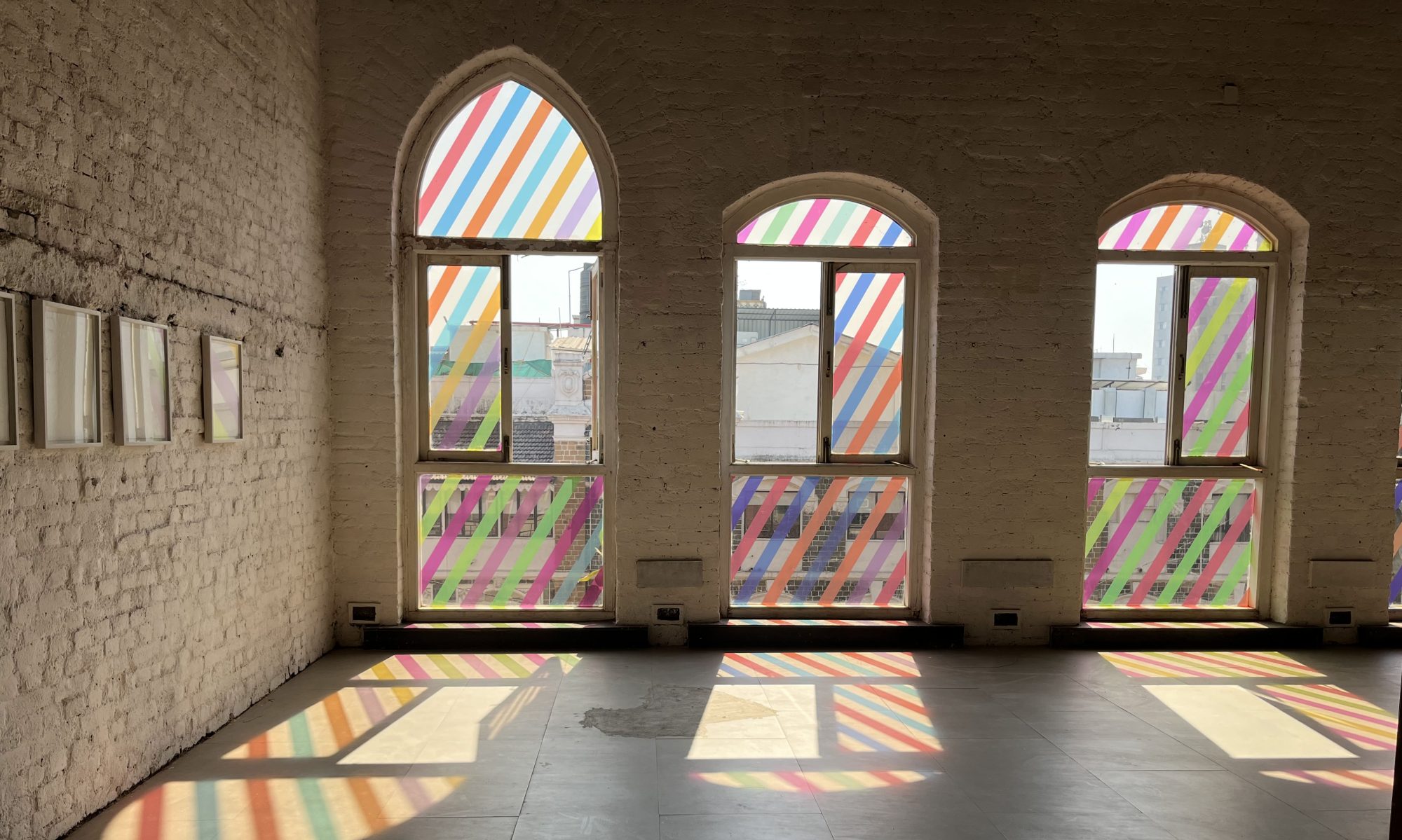

The Tale Tellers – Rose Van Mierlo

SqW:Lab fellows were invited to interpret their favourite story, song or poem via a series of images that represent key plot points within that story for an ongoing project by Charlie Levine called The Tale Tellers.

Each selection of images tells a complete tale.

A Natural Disaster – Lydia Davis

  1. In our home here by the rising sea we will not last much longer.

[no title] 1999 by Roni Horn born 1955

2. The cold and damp will certainly get us in the end, because it is no longer possible to leave: the cold has cracked open the only road away from here, the sea has risen and filled the cracks down by the marsh where it is low, has sunk and left salt crystals lining the cracks, has risen again higher and made the road impassible.

tara donovan

3. The sea washes up through the pipes into our basins, and our drinking water is brackish.
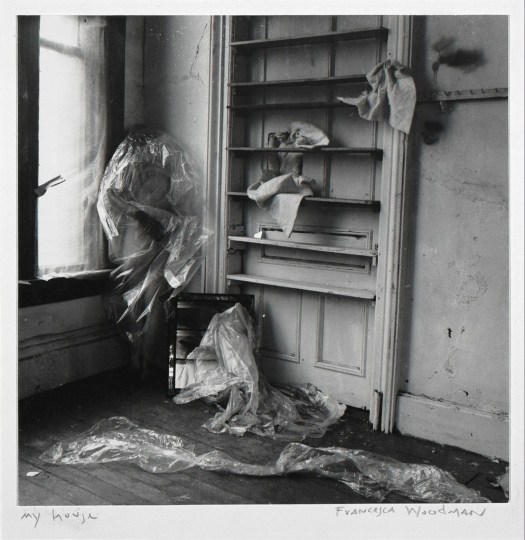
francesca woodman, 'my house, providence, rhode island', 1976, ingleby

4. Mollusks have appeared in our front yard and our garden and we can’t walk without crushing their shells with every step.
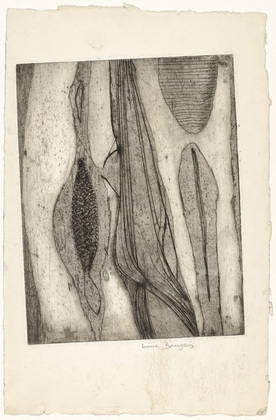
louise bourgeois. les mullesques (mollusks), state iii. (c. 1948)

5. […] Now we have moved into the upper rooms of the house and at the window watching the fish flash through the branches of our peach tree. […]

[mechanic's rock, low water]; henry p. bosse (american, 1844 - 1903); 1889; cyanotype; 26.5 × 33.2 cm (10 7:16 × 13 1:16 in.); 2002.32.4; j. p

6. What we wash and hang out the upstairs window to dry freezes: our shirts and pants make strange writhing shapes on the line.
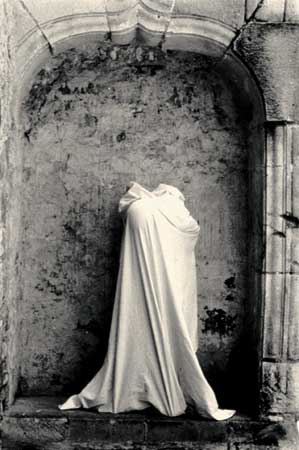
ana mendieta

7. […] Much of the day, now, we stay in bed under heavy , sour blankets; the wooden walls are wet through; the sea enters the cracks at the windowsills and trickles down to the floor.

nan goldin (united states, born born 1953),empty beds, boston, silver-dye bleach print, 24 x 36 inches. private collection, houston, tx. © nan goldin, courtesy o

8. There are three left, and we are all weak, can’t sleep but lightly, can’t think but with confusion, don’t speak, and hardly see light and dark anymore, only dimness and shadow.

nan goldin the ballad of sexual dependency

9.

hrafndiving

The Tale Tellers – Vishwa Shroff

SqW:Lab fellows were invited to interpret their favourite story, song or poem via a series of images that represent key plot points within that story for an ongoing project by Charlie Levine called The Tale Tellers.

Each selection of images tells a complete tale.

Shatranj Ke Khiladi (The Chess Players), 1924 – Munshi Premchand ( Hindi short-story)

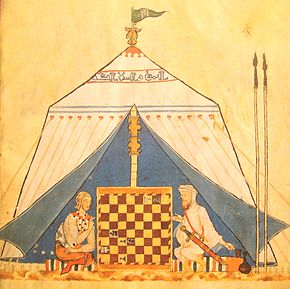
1. Christian and Muslim Playing Chess. A picture from the book of Alfonso X

christianandmuslimplayingchess

2. A Company school painting,India, Kolkata, 19th century Illustrating a street scene in Kolkata

2007_nyr_01878_0037_000()

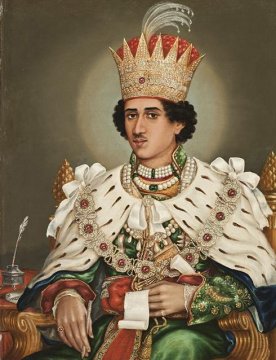
3. Nawab Nasir al-Din Haidar , second King of Oudh , by Muhammad Azam Musavvir, India, Lucknow, circa 1830

lucknow1

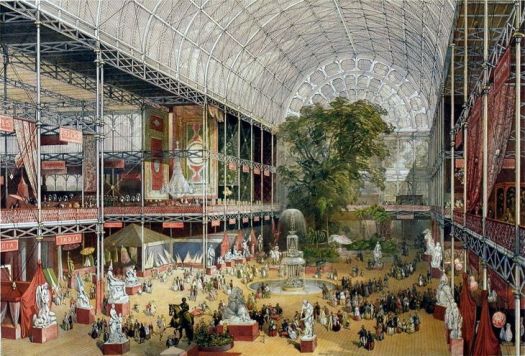
4. Dicken’s comprehensive pictures of the Great Exhibition 1851

greatexhibition_1

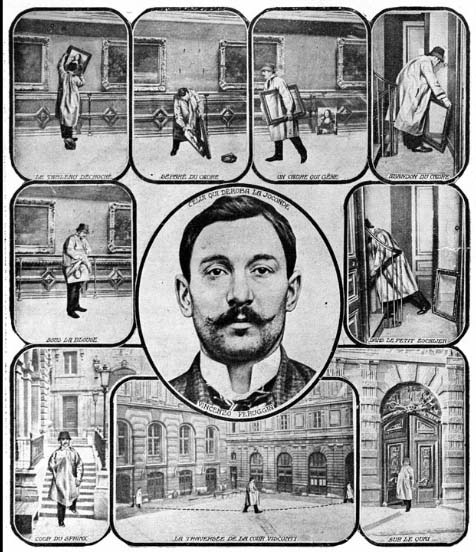
5. Recreation of Peruggia stealing the Mona Lisa.

131120091132-08-mona-lisa-stolen-restricted-horizontal-large-gallery

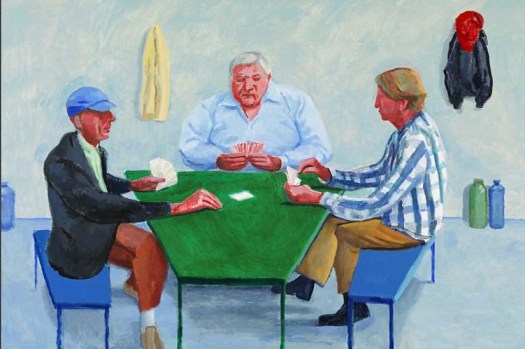
6. David Hockney – Card Players

p02rclvy

7. Moral levitation – Gaganendranath Tagore

gt_09, gaganendranath tagore, lithograph on paper size 17 x

8.  Company School Painting from the MET collection attributed to Shaikh Muhammad Amir of Karraya (active 1830s–40s)

de4mmopxoae-i1b

9. Illustration of Garden Cockfight by Yōshū Chikanobu, 1898

chikanobu illustration of childrens cockfight ihl cat 1220 my print web

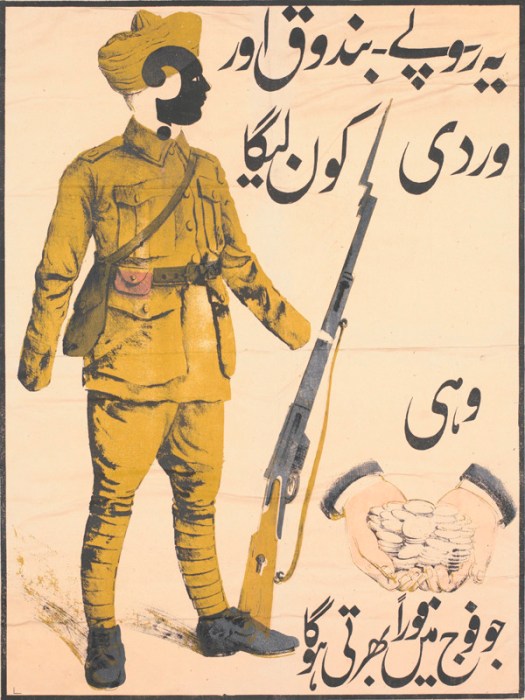
10. British Indian Army poster (from WW1) from Colonial India written in Urdu.

0q9nlj3e4hr01

11. Soldiers of the Indian Army in Egypt (the Seaforth Highlanders still wear the trews of the old 72nd Regiment)

544e7c8e3ff816bfab6f09bd0a39d573

Looking back…Vishwa Shroff

SqW:Lab had been in our conversations and thoughts for over a decade and in the making for 6 months. It is therefore rather difficult for me to summarize the excitement in words. I would like to firstly, thank the core team for jumping on board this crazy idea and making it their own. It is this sense of ownership that they have so generously presented that is most encouraging and assuring that this endeavour will continue for years to come.

The week itself, as exciting as it was, was incredibly hectic. The process of our home slowly transforming into a Lab was a stimulating experience with comfort levels increasing by the hour. Informal introductions over lunchtime cocktails kick-started conversations that would sustain the fellowship and I was amazed at how quickly these discussions began to appear. A city-walk with Alisha Sadikot, showed us Byculla in a way that I have never seen before. Oscillating between my own curiosity and making sure that everyone crossed the road, I wished for more access to places we were visiting and would like to ensure that the next time we are able to get just that. Such thoughts, of minor changes to the organisation kept appearing throughout the week and continues to do so.

Between ordering lunches and taxis, materials and meetings, I found time to engage in some amazing conversations with fellows, which led to to explore methodologies of mapping, something I had never thought of as a basis to investigate domesticity. Working largely with material aspects, this personal discovery and the newly acquired typewriter has me thinking about movements and permissions within the domestic environment: how these change over time and familiarity or over-relational acknowledgements. Furthermore, I explored the typed hyphen’s potential to act as a line and its iconographic possibilities in the mapping process to create a language that is not entirely truthful, leaving space of fictional narrative.

These moments of interaction and discoveries is what has been most exciting, affirming the need for SqW:Lab to my practice. While we now spend time playing with projects and ironing out ‘technical’ glitches, I know I can do this for a long time to come.  


Looking back…Katsushi Goto

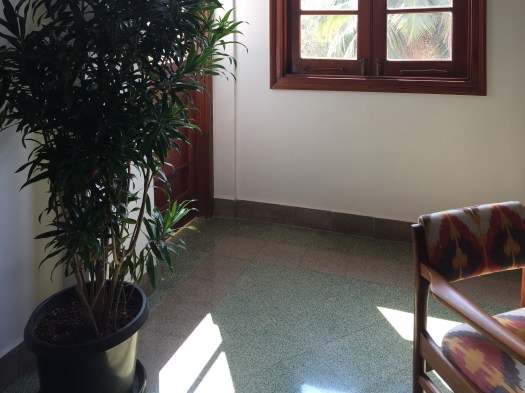
It is 10th December and been precisely a month since we have had Sqw:Lab open studio on 10th November. I left for Tokyo immediately after the open studio for 14 days. I was back to Bombay for two days and left again for Amsterdam and London for 10 days. I was supposed to write my personal reflection by the end of November, but I did not manage it while I was away from Bombay. Finally, I am sitting in my usual place, on the desk in the corner of the studio, and remembering the busiest month while feeling winter sunlight coming in the room with a shot of espresso. I remember that we made many cups of coffee during the week in Bombay!!

2018-12-10 12.49.44Katsushi Goto, winter sunlight into a corner of the studio, 10th December 2018
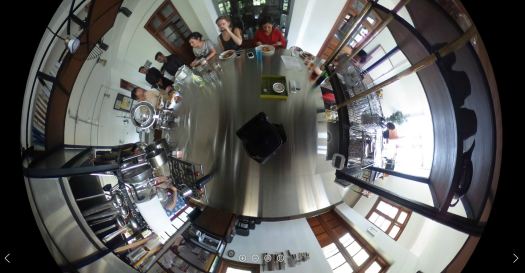
No matter how many workshops and parties we organise, it is always demanding to host the workshop in our studio/home, especially in the place was only completed a half year ago, and especially when there are not enough chairs. Nevertheless, I was so excited to have creative fellows to interact and play with, and inhabit our studio/home. Moreover, as I imagined, conversations and productions filled the space, and finally, the studio/home was lively and become a creative environment. First of all, I would like to thank all the fellows for coming and being part of the programme.

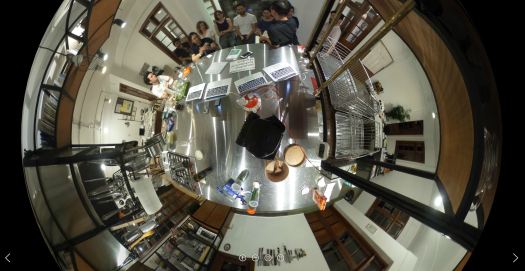
I must stress that although the programme seeks specific outcomes from the fellows, for me, hosting the programme in the space itself – which is designed by our design firm – is experimentation and a part of the long-term project. It was great to observe the fellows finding their own place to settle and work, arranging/re-arranging positions of cups, the way things are left for a night,  a location that the fellow had a conversation, and especially how the kitchen platform accommodated multiple activities. It is not recorded in any formal manner that is useful for architectural planning but as I read the other’s personal reflections there are lots of narratives that connect the spatiality and content relationship. I am sure spending a week in an unknown studio in a foreign county is not enough time to make anyone feel like it is their studio or home, but the responses from the fellows points out the direction of my search for the spatial organisation beyond the limit of the home/studio.  

southlands kitchen2sourhtlands kitchen4[image] Katsushi Goto, seeing above the kitchen, November 2018
Apart from my own concerns, the energy of production and insightful conversations was an unforgettable experience that I haven’t had in a while. Though we had a schedule and a basic framework, the real driver of production was a fellow’s action/word and reaction/response of other fellows. In fact, I have never experienced (or maybe only once) such productive moments with an open-ended programme. We need to carefully observe where these intuitive actions and responses were heading to and nurtured within each fellow’s practice and consciously engage in the process of developing play projects while keeping these moments as starting and anchor points.  


Looking back… Rose van Mierlo

IMG_3212

SONG
The strongest memory, the one that keeps sticking its head above the grass that makes up an experience, is that of the sound of the city as it wakes up. It isn’t just sound though: it is as if heat, and dust, and something ancient and animal are the only ones left on the scene after everybody else has fallen asleep. I would step outside my room and stand in the open hallway and I’d feel it. Something was very much alive.

Night and day mean different things here.

DUSK / DUST
It is exhilarating to walk through a city you’ve never visited before. My feet got dirty every day, and washing them at night became somewhat of a ritual. I got blisters quickly, but it didn’t bother me that much. Walking around as a group has an organic feeling to it; you pull and shrink and pull as you move yourself around. Everyone keenly aware of where the others are. It’s fascinating, really, to move as a school of fish, or a flight of sparrows. Breathing out, breathing in. Here is hot chai on dusty street corners, here is a man who knows so much more than you. Here falls the dusk as a powdery curtain; scraggly street cats sleep under the fluorescent lights.

LISTENING TO…
I love listening to people talk about their work. I won’t lie about it; it fascinates me to hear how other people do things. Yes, it did go on too long. Next time we should manage that. But in two days I learnt more about the world than from any encyclopaedia. I saw the streets of Brazil, I marked forgotten spaces with my eyes in America. I picked up small things to hold as though they were the greatest treasure; and I left magnesium to burn until my grief burned away with it. I mapped and routed, I started and stopped. I wandered and wondered about places and people, and uncoiled myself in the presence of others.

CHAOS
Mumbai is a sound bath. There is honking and yelling, yellow little taxi cars speeding by, people going, going, going and moving, moving, moving in undecipherable patterns. Mumbai is stop and start, not in a smooth line but erratic spasms bursting out left and right. It takes time to adjust, to move in tandem with the new and unexpected. It’s all process, really.

ECHOES
I’m always curious to know what the world does to a body. What happens when you go from one place to the next? How does the liver think about departure, so suddenly? Or saying goodbyes? What does the spleen have to say about the long hours waiting in airports, the early morning sun of England (so pale, so beautiful). It’s hard to think about the past weeks with the brain; it gets tangled so quickly in there, stuck in vague and generic affirmations: it was kind of crazy, kind of hard, kind of amazing, so very new. Better not to think too much about these things. Better to feel.

How to hands get dry with the approaching snow.
How the stomach mulls over conversations had.
How the kidneys hold on to colours.
How the body holds on to echoes.